Knowledge Center
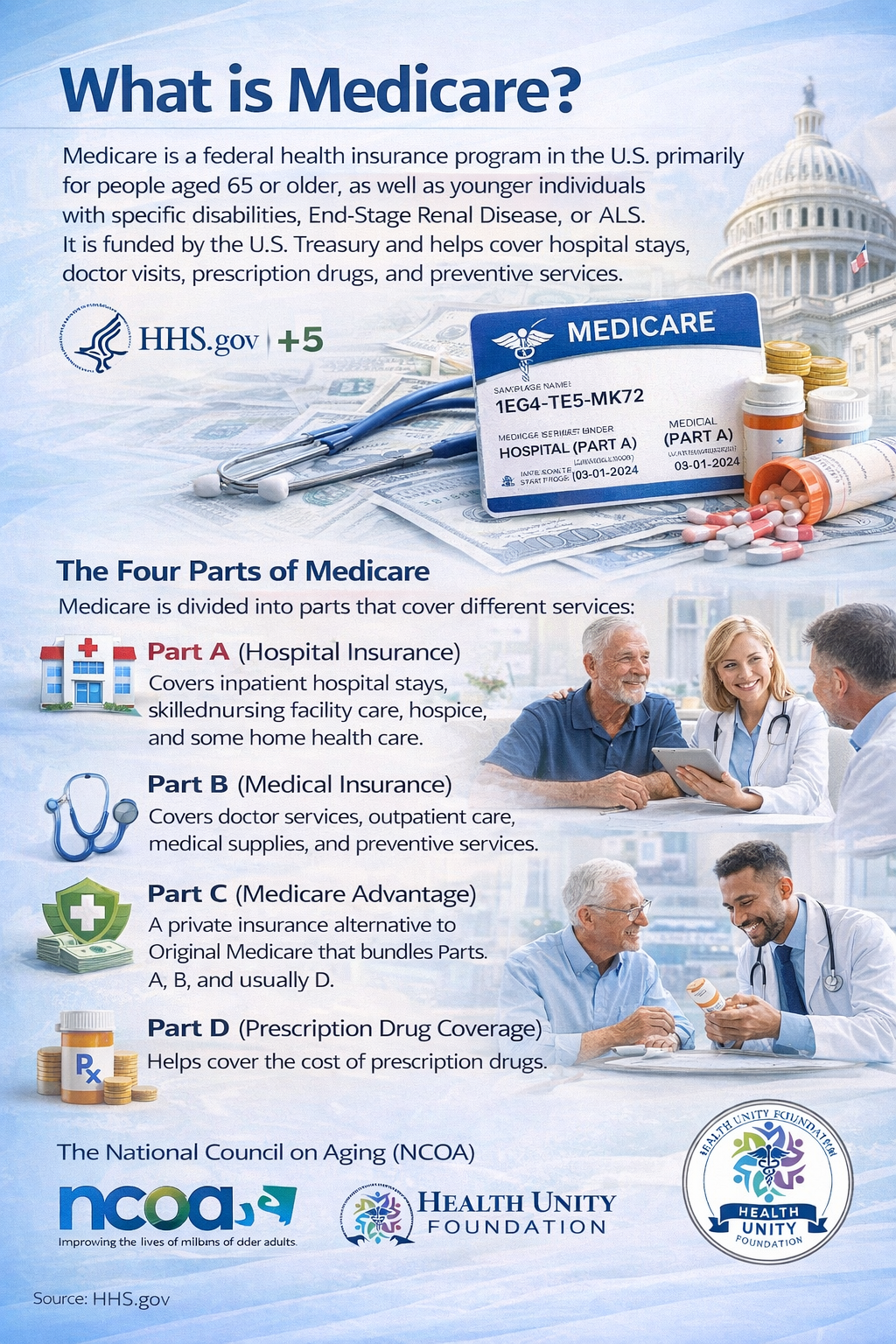
Medicare is a federal health insurance program in the U.S. primarily for people aged 65 or older, as well as younger individuals with specific disabilities, End-Stage Renal Disease, or ALS. It is funded by the U.S. Treasury and helps cover hospital stays, doctor visits, prescription drugs, and preventive services.
The Four Parts of Medicare
Medicare is divided into parts that cover different services:
Part A (Hospital Insurance): Covers inpatient hospital stays, skilled nursing facility care, hospice, and some home health care.
Part B (Medical Insurance): Covers doctor services, outpatient care, medical supplies, and preventive services.
Part C (Medicare Advantage): A private insurance alternative to Original Medicare that bundles Parts A, B, and usually D. It may offer extra benefits like vision, hearing, and dental.
Part D (Prescription Drug Coverage): Helps cover the cost of prescription drugs.
The National Council on Aging (NCOA)
Eligibility and Enrollment
Age: Individuals 65 or older who are U.S. citizens or permanent residents.
Disability: People under 65 with disabilities (typically after a 2-year waiting period for Social Security Disability Insurance).
Conditions: Individuals with ALS or permanent kidney failure.
When to Sign Up: You can enroll during your Initial Enrollment Period, which is 3 months before to 3 months after your 65th birthday.
Medicare (.gov)
How Medicare Works
Original Medicare: Part A and Part B, managed by the federal government.
Medicare Advantage: Private plans approved by Medicare, which may have different rules, costs, and networks.
Costs: Generally, there are monthly premiums (especially for Part B), deductibles, and coinsurance/copayments.