

Knowledge Center
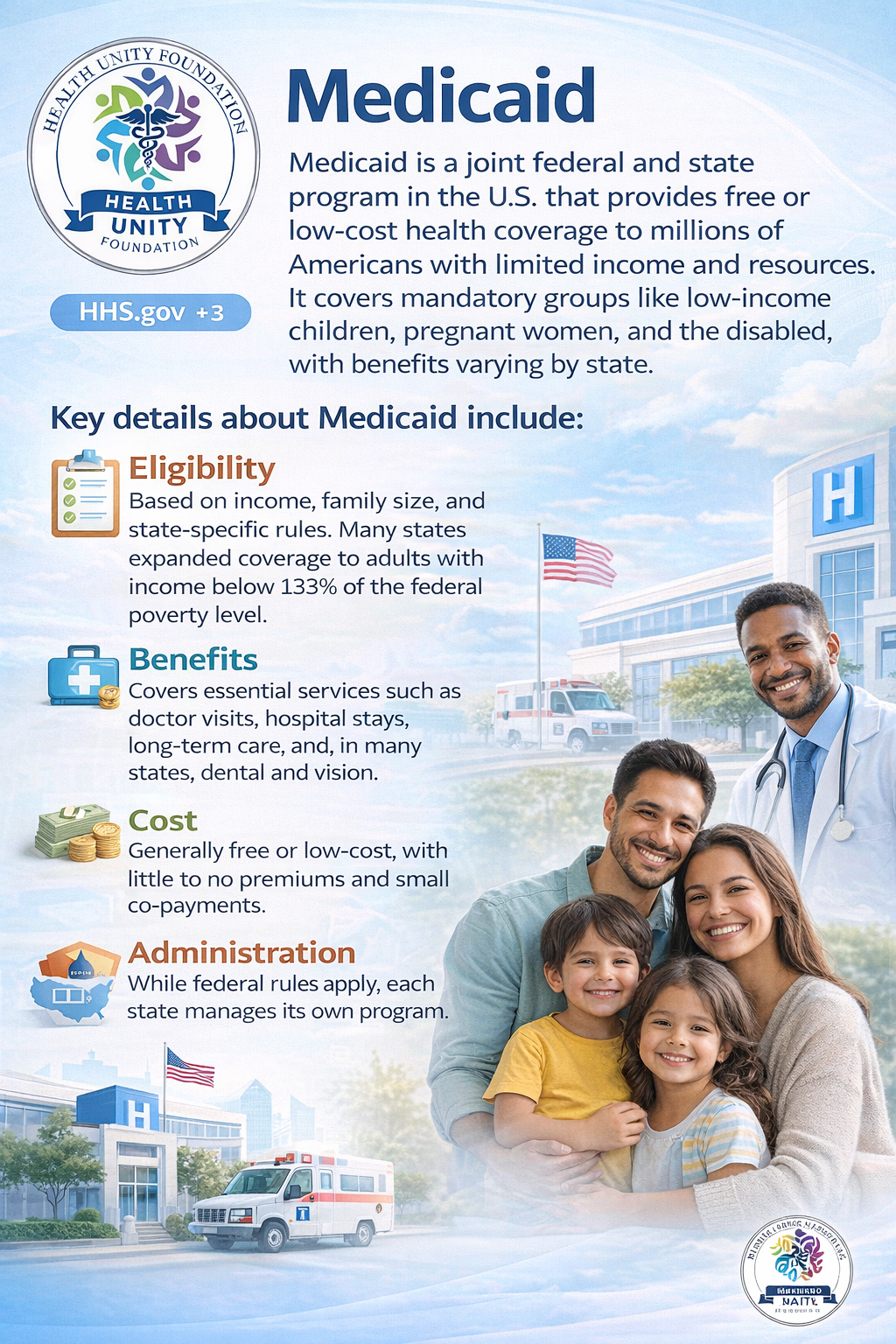
What is Medicaid
Medicaid is a joint federal and state program in the U.S. that provides free or low-cost health coverage to millions of Americans with limited income and resources. It covers eligible adults, children, pregnant women, elderly adults, and people with disabilities, offering benefits not typically covered by Medicare, such as long-term care. HHS.gov
Key details about Medicaid:
Eligibility and Enrollment: Eligibility is based on income and family size, with rules varying by state. Many states have expanded Medicaid to cover adults with low incomes, while others have not.
Coverage and Costs: Medicaid covers services like doctor visits, hospital stays, long-term care, and, in some cases, dental and vision. Enrollees usually pay little to no cost for covered services.
Administration: While it follows federal guidelines, each state runs its own program, meaning coverage and eligibility differ significantly by location.
Application: Applications can be submitted directly through a state agency or the Health Insurance Marketplace. HHS.gov
Medicaid vs. Medicare
Unlike Medicare (a federal program for people over 65 or with specific disabilities), Medicaid is designed specifically for low-income individuals.
Commonwealth Fund
What does it cover?
Medicaid covers mandatory benefits, including:
Inpatient and outpatient hospital services
Doctor visits
Nursing facility services
Lab and X-ray services
Home health services
Transportation to medical care
It is important to note that Medicaid is the largest source of health coverage in the U.S. and often operates under different names in various states, such as TennCare in Tennessee or Medi-Cal in California