


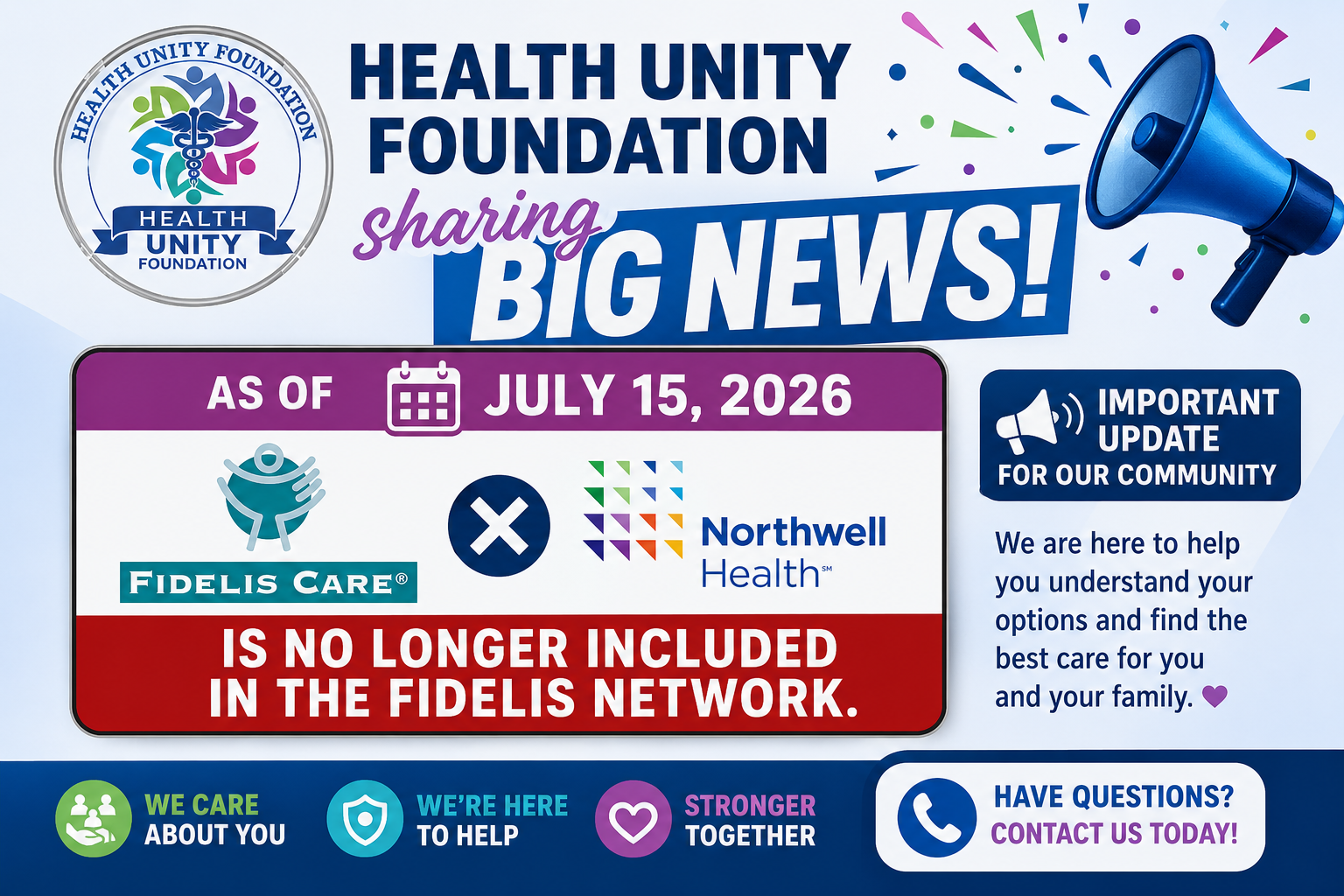
Northwell- Fidelis FAQ
As of July 15, 2026, Northwell Health is no longer included in the Fidelis Network. This may
impact Medicaid, Essential Plan, Child Health Plus (CHPlus) and Qualified Health Plan
enrollees who are enrolled with Fidelis and who live or receive care in the following
counties: Nassau, New York, Queens, Richmond, Suffolk and Westchester and who receive
care from Northwell Health providers. This document is intended to provide guidance to NY
consumers regarding this change, including how to request another Managed Care plan.
FREQUENTLY ASKED QUESTIONS ABOUT THIS TRANSITION
FOR MEDICAID, ESSENTIAL PLAN, CHILD HEALTH PLUS, and QUALIFIED HEALTH
PLANS
• Q: How is my coverage impacted during this transition? • After July 16, 2026, Northwell providers will be out of network with Fidelis.
• Consumers will remain in Fidelis for the month of August.• Consumers who request to change plans by August 15th will have their newly
requested plan effective September 1.• Consumers who request to change plans August 16th –September 15th will
have their newly requested plan effective October 1.• Established Managed Medicaid, Essential Plan and Exchange (Marketplace)
patients can continue treatment with Northwell providers through August 13,2026. • Emergency services remain available to all Fidelis members at all Northwell
emergency departments regardless of Northwell’s network participationstatus.
• Q: I’m pregnant. How does this transition impact my care?• Pregnant patients may continue care with their Northwell clinicians through
delivery and postpartum care.2
7/28/2026
MEDICAID
• Q: I have Medicaid. How do I select another Managed Care Plan if I don’t want to
remain in my current plan?
• Consumers who have their Medicaid through NY State of Health and who live in Nassau, New York, Queens, Richmond, Suffolk or Westchester counties, can call
NYSOH at 1-855-355-5777 (TTY: 1-800-662-1220). • Consumers who have their Medicaid through their Local Department of Social
Services or who use Northwell providers but do not live in one of the specified counties should call the enrollment broker, New York Medicaid Choice, at 1-800-
505-5678(TTY: 1-888-329-1541) for assistance in selecting a different plan. ESSENTIAL PLAN AND CHPLUS
• Q: I have Essential Plan or CHPlus. How do I select another plan if I don’t want to remain in my current plan?
• Consumers in EP or CHPlus can change plans at any time. QUALIFIED HEALTH PLAN (QHP)
• Q: What is a Special Enrollment Period (SEP)? • Enrollment in Qualified Health Plans is permitted during the annual open
enrollment period (Nov 1 – Jan 31). Outside of Open Enrollment, QHP consumers can enroll or change plans if they qualify for a “Special
Enrollment Period.” Consumers who are impacted by this provider network disruption qualify for this Special Enrollment Period (SEP). They can contact
NY State of Health Customer Service Center at 1-855-355-5777.
• Q: How long would the special enrollment period last? • Consumers have 60 days to request this SEP, so they have from July 15 to
September 13. • Q: What happens to my coverage after 7/15? I have concerns about access to care
during this transition? • Fidelis advised that beginning July 16, standard out-of-network access
requirements would apply. Members should generally seek non-emergency 3 7/28/2026care from an in-network provider. If there is not an in-network provider
available who can provide the necessary service or otherwise meet the member’s needs, Fidelis may approve out-of-network access. In those
situations, the out-of-network provider would need to reach a reimbursement agreement with Fidelis through a single case agreement.
Members with non-emergency care already scheduled should contact Fidelis to discuss their specific circumstances and determine whether the
plan can work with the member and provider to allow the service as in- network.
• Q: Do consumers have the option to request the SEP effective retroactive to 7/1 so that care from Northwell between 7/15 and 8/1 would be covered?
• Based on the way enrollment effective dates are processed, members requesting an SEP between July 15 and August 1 will generally follow the
standard 15th-of-the-month effective date rules. As a result, their Fidelis coverage would continue through August 31, with enrollment in the new plan
effective September 1. • If a member would like to request an earlier effective date of August 1 or July 1, we can grant that request; however, the member would need to specifically request the backdated effective date through the Customer
Service Center (1-855-355-5777).
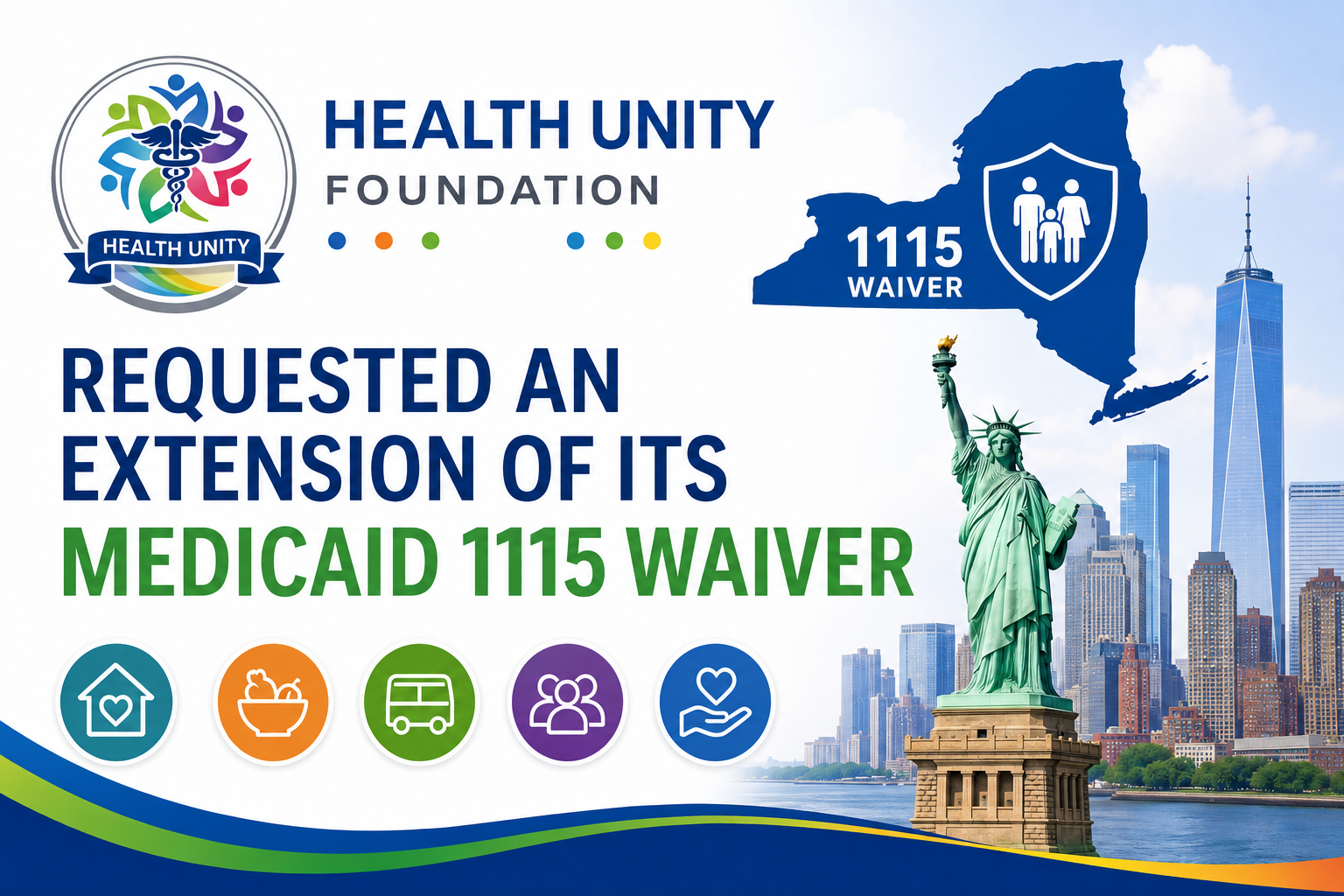
New York Requested an Extension of Its Medicaid 1115 Waiver
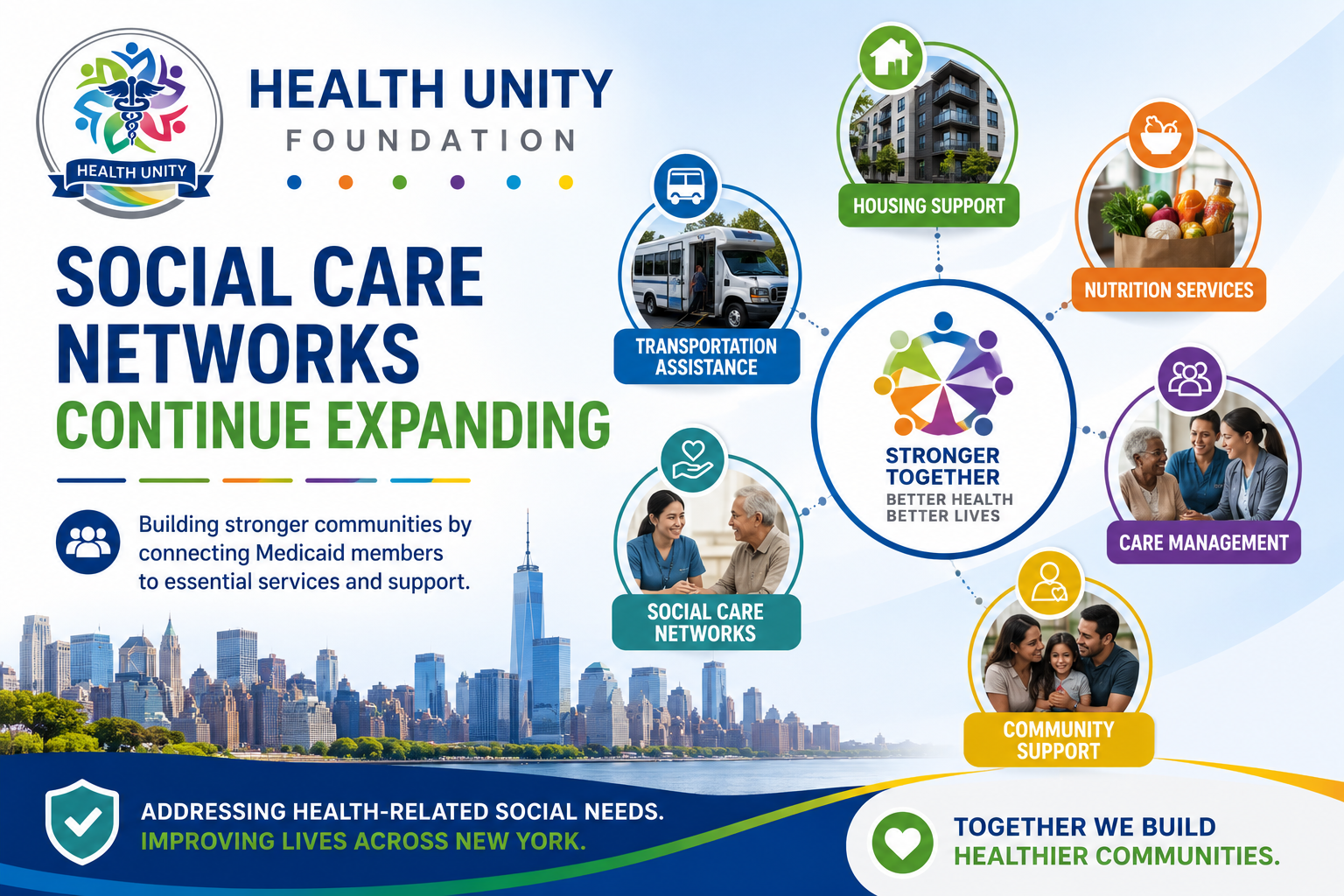
New York State recently submitted a request to extend its Medicaid 1115 Waiver beyond March 2027. The proposal would continue funding for:
Housing support services
Nutrition services
Transportation assistance
Social Care Networks (SCNs)
Care management programs for Medicaid members with health-related social needs.
For NYC residents, this means programs that help address issues outside of traditional medical care—such as food insecurity and housing instability—could continue if approved.
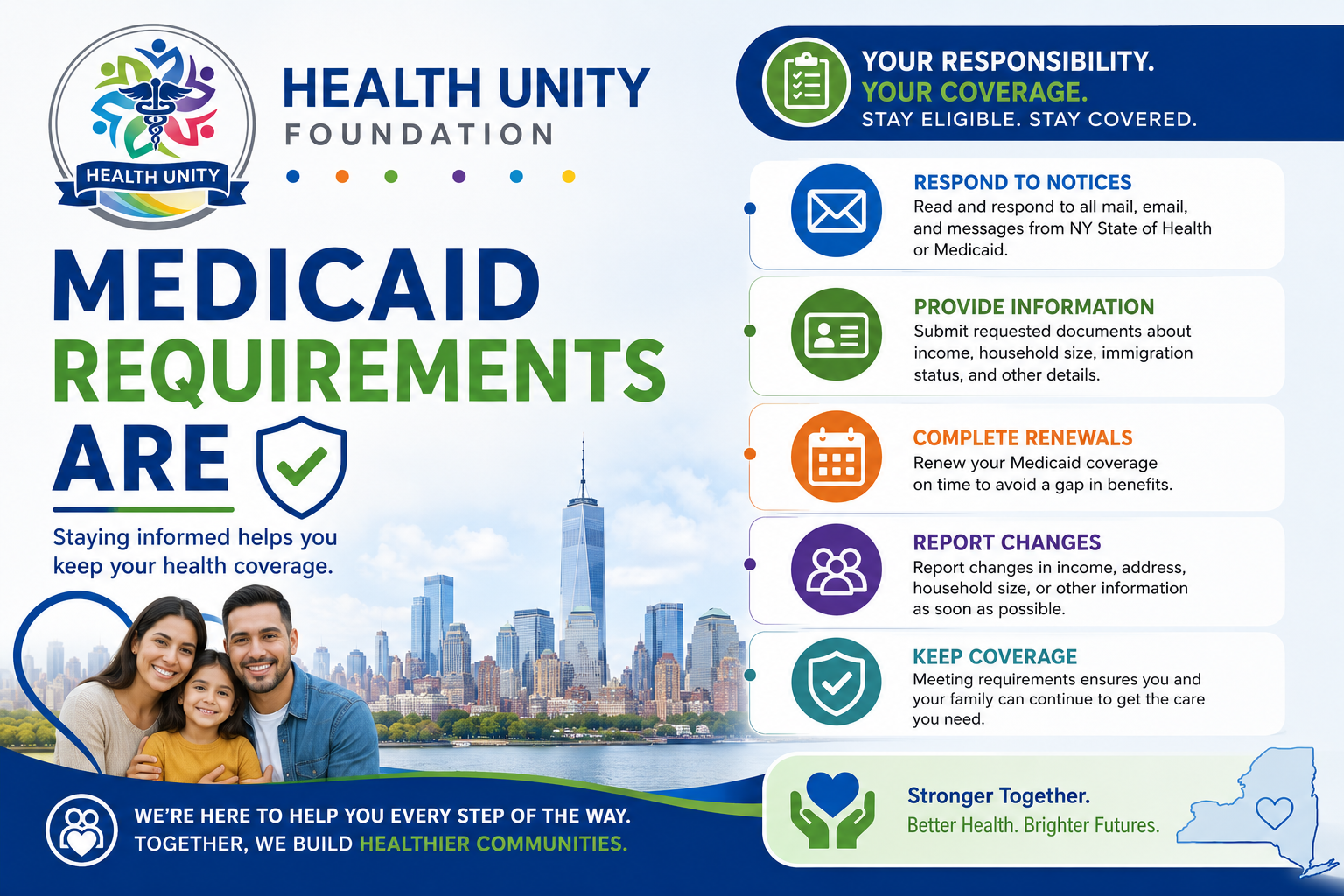
Medicaid Requirements Are
New York City Medicaid members should continue watching their mail, email, and NY State of Health accounts for:
Renewal notices
Requests for proof of income
Immigration documentation requests
Household information verification
Missing a renewal deadline can result in loss of coverage. Brokers and assistors are reporting increased numbers of Medicaid renewals and coverage transitions in 2026.
Social Care Networks Continue Expanding
Federal legislation provides for Medicaid community engagement requirements beginning January 1, 2027, for certain populations. Many individuals are expected to qualify for exemptions, including some:
People with disabilities
Caregivers
Pregnant individuals
Other protected groups defined in federal and state guidance
New York is expected to issue additional implementation details before these requirements take effect. Important Information for NYC Medicaid Members
If you're enrolled in Medicaid in New York City, you should:
Update your mailing address immediately if it changes.
Report income changes promptly.
Open and respond to all renewal notices.
Review any NY State of Health correspondence carefully.
Verify your Managed Care plan annually.
Keep copies of all requested documentation.
New York's Medicaid home care programs remain under intense review by both state and federal officials as policymakers work to improve oversight, strengthen consumer protections, and ensure the responsible use of public funds. The discussions primarily focus on how home care services are administered, financed, and delivered to Medicaid beneficiaries across the state.
Key Areas Under Review Include:
1. Program Administration
State officials continue evaluating how Medicaid home care services are coordinated and delivered to ensure beneficiaries receive timely, appropriate, and high-quality care. The goal is to improve program efficiency while minimizing administrative barriers that may affect access to services.
Current reviews include:
Authorization and approval processes for home care services.
Coordination between Medicaid Managed Care plans and providers.
Timeliness of service delivery for eligible members.
Oversight of member complaints and appeals.
Quality assurance and performance standards for providers.
2. Fiscal Intermediary Operations
New York's transition to a Single Fiscal Intermediary (SFI) model for the Consumer Directed Personal Assistance Program (CDPAP) has received significant attention. State and federal officials continue reviewing:
Contract administration and procurement procedures.
Consumer transitions to the new fiscal intermediary system.
Payroll processing for personal assistants.
Compliance with federal Medicaid requirements.
Operational readiness and service continuity protections.
The transition has generated ongoing legal and policy discussions regarding implementation timelines and consumer impacts.
3. Medicaid Spending and Accountability
New York maintains one of the nation's largest Medicaid programs, making fiscal oversight an important priority. Reviews are focused on:
Responsible management of Medicaid expenditures.
Preventing fraud, waste, and abuse.
Improving transparency in home care spending.
Ensuring funds are directed toward medically necessary services.
Strengthening financial accountability measures across the program.
Officials continue examining ways to balance program sustainability with maintaining access to essential services for beneficiaries.
4. Consumer Protections
Protecting Medicaid beneficiaries remains a central focus of ongoing discussions. Current efforts are intended to ensure:
Members continue receiving authorized services without interruption.
Consumers have access to clear information regarding their rights and benefits.
Individuals can file complaints or request appeals when necessary.
Vulnerable populations receive appropriate care coordination and support.
Home care workers and consumers are supported throughout program changes.
What This Means for Medicaid Members
At this time, Medicaid beneficiaries who have been approved for home care services should continue receiving their authorized benefits. Policy discussions and administrative reviews do not automatically change an individual's eligibility or approved services.
Members should:
Continue attending scheduled assessments and appointments.
Respond promptly to Medicaid renewal notices.
Maintain current contact information with Medicaid and their Managed Care plan.
Report any interruptions in authorized services immediately.
Keep copies of all notices and documentation received from Medicaid or their health plan.
Looking Ahead
New York is expected to continue refining its Medicaid home care programs throughout 2026 and beyond. Policymakers have emphasized three primary objectives:
Maintaining access to medically necessary home care services.
Strengthening program oversight and fiscal accountability.
Improving consumer protections for Medicaid beneficiaries.
While discussions regarding administration and funding continue, eligible Medicaid members should not assume that currently authorized services will automatically end. State officials have repeatedly emphasized the importance of preserving access to care while implementing improvements to the program.
Important Reminder: If you currently receive Medicaid home care services, continue using your benefits as authorized and respond promptly to any communications from your Medicaid Managed Care plan or New York State regarding renewals, assessments, or program updates
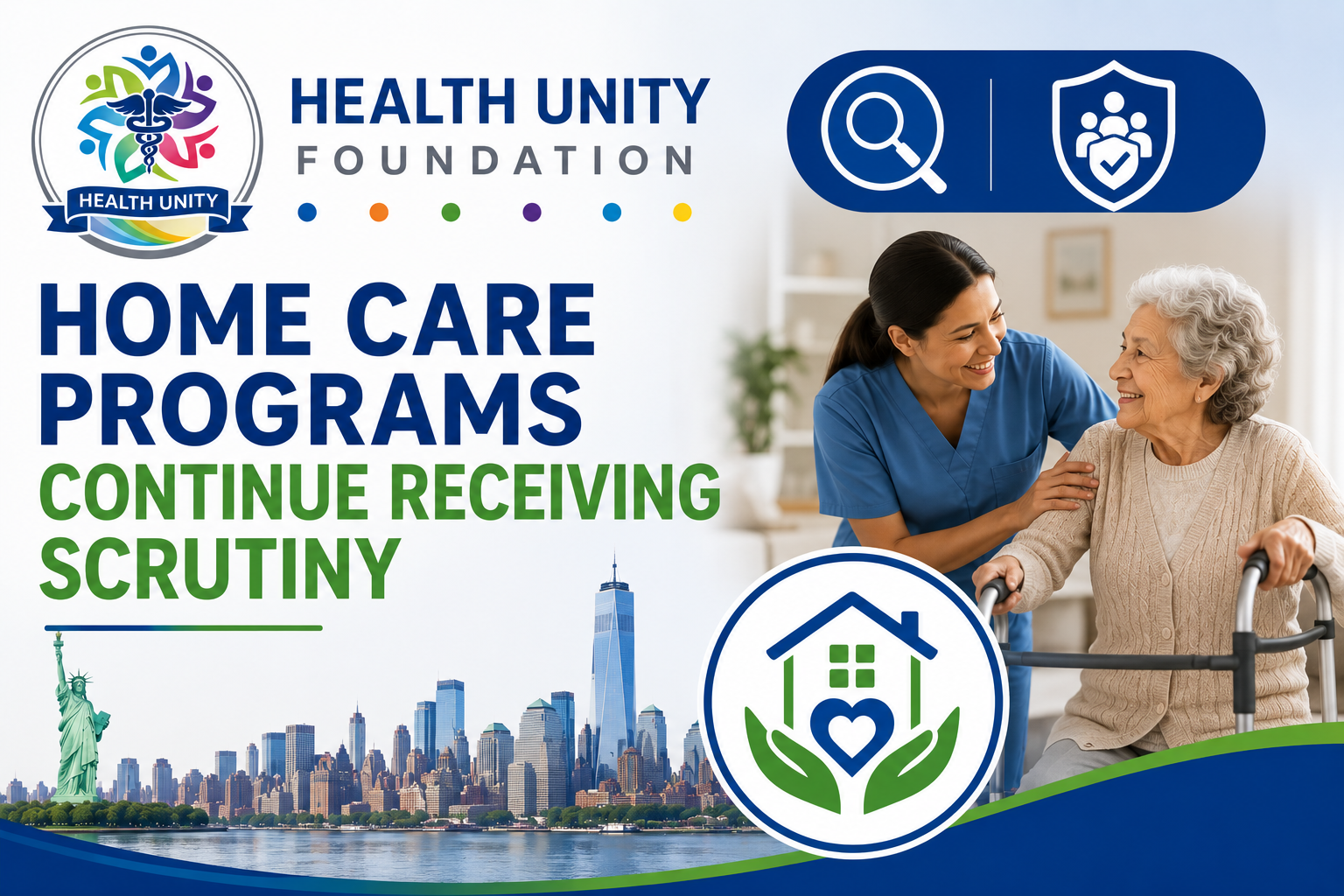
Home Care Programs Continue Receiving Scrutiny
New York's Medicaid home care programs continue to receive significant attention from both state and federal officials regarding:
Program administration
Fiscal intermediary operations
Medicaid spending
Consumer protections
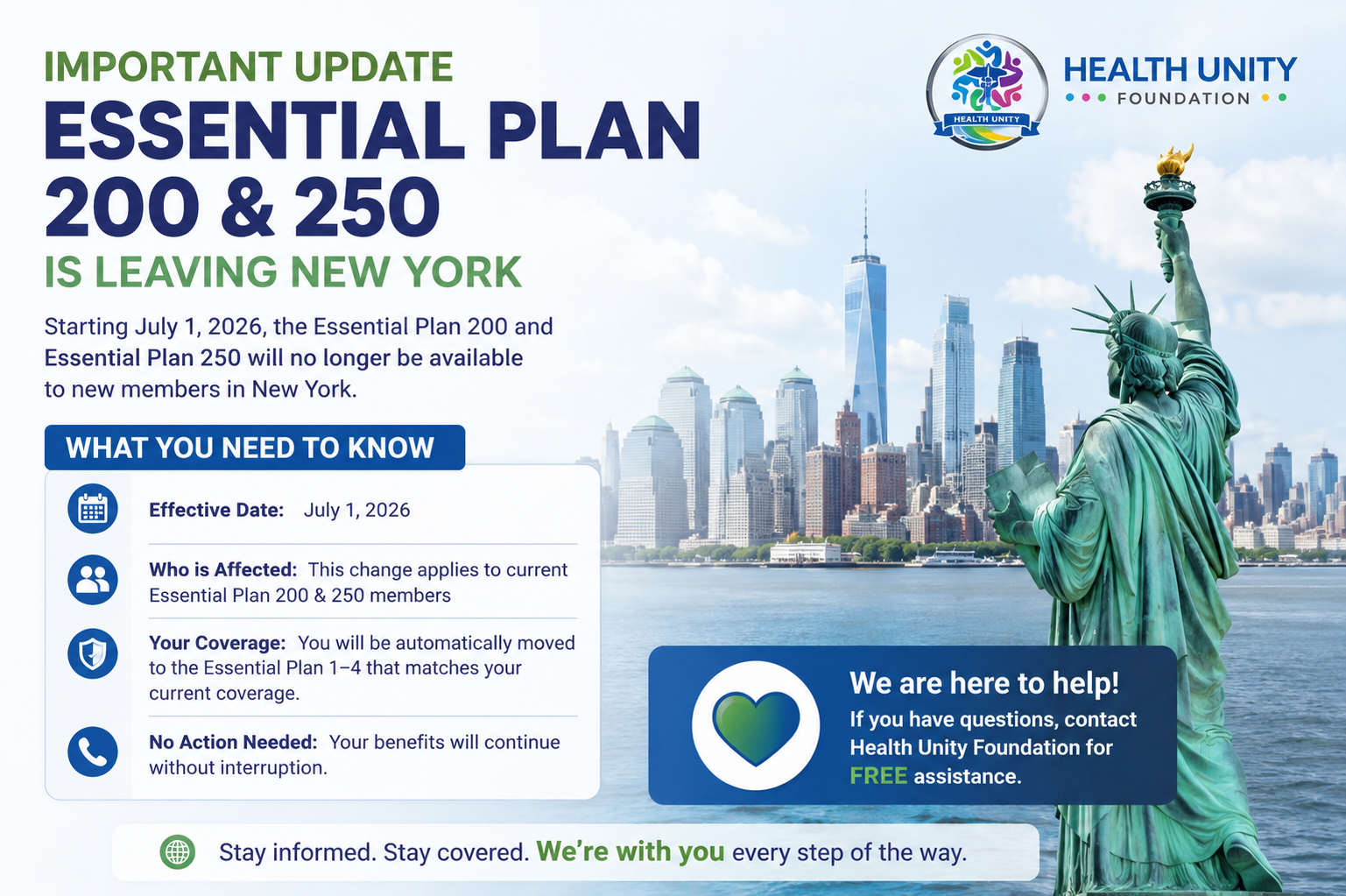
Essential Plan 200–250 Coverage Has Ended: What New Yorkers Need to Know
July 2026
Health Unity Foundation wants to inform New Yorkers about an important change to health insurance coverage through the New York State of Health Marketplace.
Effective July 1, 2026, the Essential Plan coverage category for individuals and families with household income between 200% and 250% of the Federal Poverty Level (FPL) has ended. As a result, many New Yorkers who were enrolled in this coverage category are no longer eligible for the Essential Plan and must transition to another health insurance option. Approximately 450,000 New Yorkers are expected to be affected by this change.
Who Is Affected?
This change applies to individuals enrolled in the Essential Plan 200–250% FPL category (sometimes referred to as Essential Plan 5).
If your household income is above 200% of the Federal Poverty Level, your Essential Plan coverage ended on June 30, 2026 unless you qualify for another exception or coverage category.
What Are Your Options?
If you lost Essential Plan coverage, you may qualify for:
A Qualified Health Plan (QHP) through NY State of Health, with financial assistance depending on your income.
Medicaid, if your eligibility has changed.
Continued Essential Plan coverage if you qualify under certain pregnancy or postpartum rules.
Employer-sponsored health insurance, if available.
Important Deadlines
Losing Essential Plan coverage qualifies you for a Special Enrollment Period, allowing you to enroll in new health insurance without waiting for the annual Open Enrollment period. Acting promptly helps prevent a gap in coverage.
No Changes for Most Essential Plan Members
If you are enrolled in Essential Plan 1 through Essential Plan 4 (generally for individuals and families with income up to 200% FPL) and continue to meet eligibility requirements, your coverage is not affected by this change.
We're Here to Help
Health Unity Foundation is an officially designated NY State of Health Assistor Organization. Our certified enrollment staff can help you:
Review your eligibility
Compare available health plans
Apply for a Qualified Health Plan
Renew your health insurance
Determine whether you qualify for Medicaid or other programs
Understand your financial assistance options
Our enrollment assistance is free, confidential, and available in multiple languages.
Need assistance? Contact Health Unity Foundation today to review your coverage options and maintain your health insurance without interruption.